Online Safety for Families
Supporting children to stay safe online is a shared responsibility between school and home. At Creative Education Trust, we want every child to benefit from technology safely, confidently and responsibly.
This page brings together trusted guidance, practical advice and resources to help parents and carers support their children's digital lives, from managing devices and understanding online risks to knowing where to turn when something goes wrong.
Start here: CET Online Safety Hub
We recommend that all parents and carers explore the CET Online Safety Hub, our dedicated resource offering expert guidance on keeping children safe online. The Hub provides advice on a wide range of topics, including:
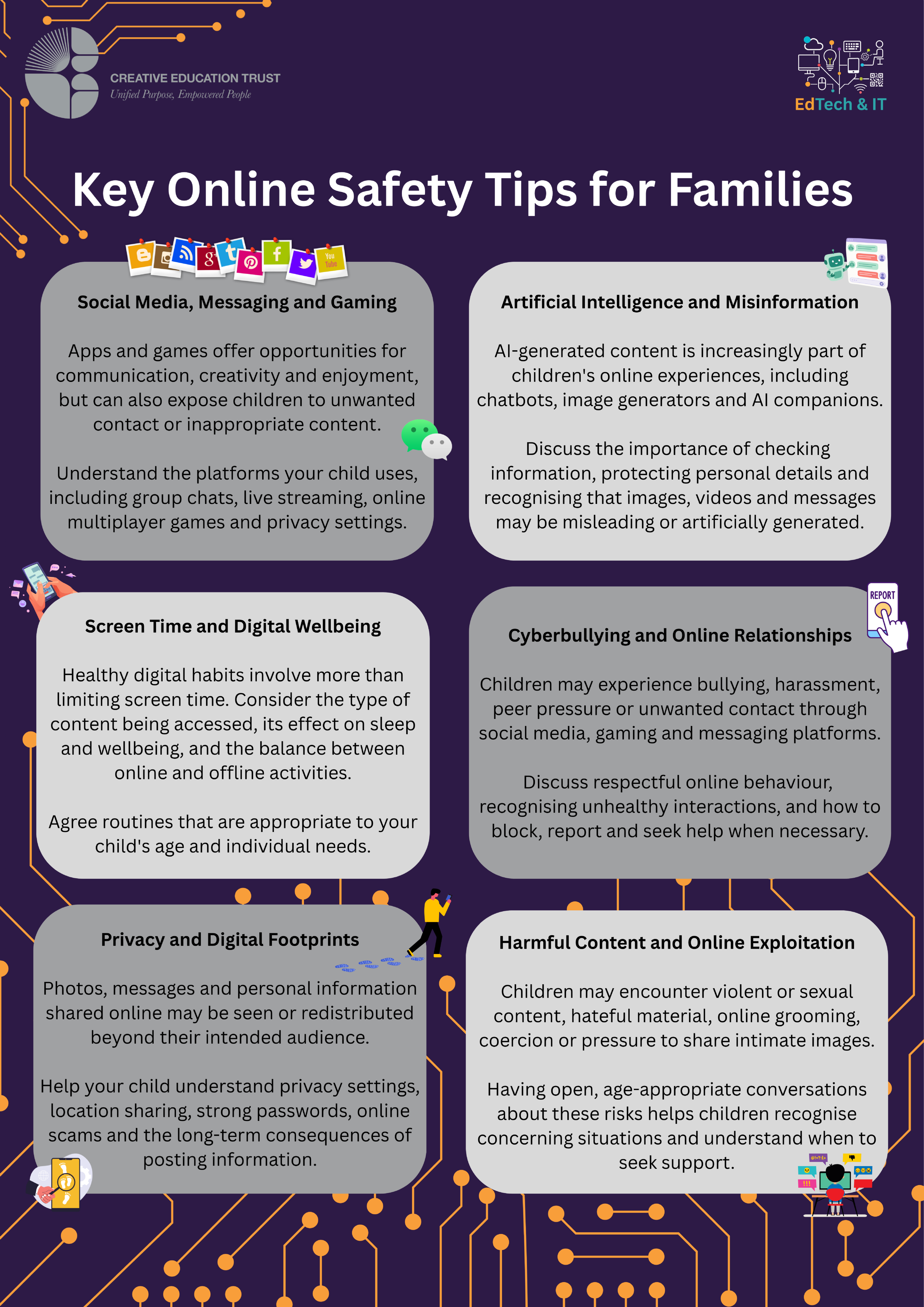
- Social media, messaging apps and online gaming
- Screen time, digital wellbeing and healthy technology habits
- Cyberbullying, inappropriate content and online exploitation
- Privacy, online relationships and emerging digital risks
- Practical safety settings and conversations to have at home
Whether you are setting up your child's first device or trying to understand an unfamiliar app, the Hub offers practical guidance to help you make informed decisions.
Worried about something that has happened online?
If your child experiences something upsetting, harmful or unsafe online, it is important that they feel able to speak to a trusted adult.
Listen calmly, reassure them that they have done the right thing by telling you, and seek appropriate support. There are several organisations that can help:
- Contact your child's school: If you are concerned about your child's safety or wellbeing, contact the school's Designated Safeguarding Lead (DSL).
- CEOP: Report concerns about online sexual abuse, grooming or exploitation involving a child.
- Report Harmful Content: Get advice about reporting harmful online content, including help where a platform has not addressed a report appropriately.
- Childline Report Remove: Helps young people under 18 report sexual images or videos of themselves that have been shared online, including AI-generated images.
- Internet Watch Foundation: Report suspected child sexual abuse images or videos found online.
- Childline: Confidential advice and support for children and young people, including through its free helpline on 0800 1111.
Where appropriate, use the platform's reporting tools. Do not forward or share harmful images, particularly sexual images involving children.
Supporting your child online: Five practical steps
Small, regular actions can make a significant difference to children's online safety.
- Talk regularly. Ask your child what they enjoy online, which apps or games they use, who they communicate with and how their online experiences make them feel.
- Agree boundaries together. Set age-appropriate expectations around device use, screen time, bedtime routines and online behaviour.
- Check privacy and safety settings. Review who can contact your child, view their content or access their location. Make this part of your routine whenever they start using a new app or device.
- Understand the platforms they use. Check age requirements, messaging features, in-app purchases and potential risks before allowing access.
- Make asking for help easy. Encourage your child to speak up whenever something feels uncomfortable, confusing or unsafe, without fear of getting into trouble.
For more practical advice, visit the NSPCC's guidance on talking to children about online safety.
Key Topics for Families
The following topics are particularly relevant to families navigating children's online lives. You can explore each area in more detail through the CET Online Safety Hub.
Parental Controls: Qustodio
To help families manage devices and online activity, Creative Education Trust provides access to Qustodio, a parental-control tool.
Depending on the device and subscription features available, Qustodio can help parents and carers:
- Manage access to websites and apps
- Set screen time limits and device schedules
- View information about online activity
- Receive alerts about certain potential online risks
Families can access a 30-day Premium trial through the Trust's offer.
Parental controls are a useful safeguard, but they work best alongside regular conversations, age-appropriate supervision and trust. It is important to discuss their use with your child and adapt your approach as they grow older.
For additional guidance on safety settings across different devices, apps and gaming platforms, visit Internet Matters' parental-control guides.
Online Safety Advice for Different Ages and Needs
Children's online experiences and support needs change as they grow. The following resources offer more tailored guidance.
Younger children: Focus on supervised use, age-appropriate content, simple safety messages and developing healthy habits. See the Government's guidance on screen use for children under five.
Older children and teenagers: Support growing independence through conversations about social media, online relationships, privacy, digital wellbeing and responsible decision-making. Internet Matters provides age-specific guidance.
Children with special educational needs and disabilities (SEND): Some children may benefit from more tailored explanations, accessible resources and additional support in understanding online interactions. The Inclusive Digital Safety Hub provides resources for families supporting children with additional needs and vulnerabilities.
Additional Resources and Support
Alongside the CET Online Safety Hub, the following trusted organisations offer further guidance:
- Internet Matters: Practical advice organised by age, issue, activity and platform, including step-by-step parental controls.
- NSPCC: Guidance on online safety, children's wellbeing, online abuse and supporting children through difficult experiences.
- UK Safer Internet Centre: Resources for families, including information on emerging risks, digital safety and reporting concerns.
- Children's Commissioner for England: Research, insights and resources reflecting children's experiences and wellbeing, including their digital lives.
How Creative Education Trust Supports Online Safety
Across our schools, online safety is an important part of our wider safeguarding responsibilities. We support children to develop the knowledge and skills to use technology safely and responsibly, alongside appropriate filtering and monitoring arrangements on Trust-managed systems.
We encourage parents and carers to work closely with their child's school, particularly where an online experience is affecting their safety, wellbeing or learning.
If you have a safeguarding concern, please contact your child's school and ask to speak to the Designated Safeguarding Lead.
You can also read the Trust's Online Safety and Safeguarding Policies for further information about our approach.